|
- Karakter
Character
- Geschiedenis
History
- Ras standaard
Breed standard
Karakter omschrijving/ CHARACTER DISCRIPTION
Algemeen:
Kelpies zijn intelligente, hardwerkende honden die onschatbare hulp geleverd hebben aan de Australische schapenhouders.
Tijdens het werk als schapenhonden zijn het onvermoeibare werkers die vijftig kilometer per dag kunnen afleggen. Ze zijn toegewijd aan hun werk en ze kunnen de hele dag door werken met slechts een kleine pauze tussendoor.
Ze zijn snel en behendig. Hun liefde voor het werken zit in hun instinct evenals hun vermogen schapen te drijven. Kelpies werken goed, zowel op het erf, als sporthond als op het open veld. Het zijn ook loyale en intelligente huisdieren. Het is echter belangrijk dat ze actief gehouden worden om hun grenzeloze energie te bevredigen Ze tonen zich aanhankelijk en trouw ten aanzien van de baas en diens gezinsleden en gehoorzamen goed.
Een doorsnee kelpie heeft een stabiel en evenwichtig karakter. Hij is alert op wat er in de omgeving gebeurt en laat zijn stem horen als er onraad is.
Door hun enorme will-to-please is deze hond vrij eenvoudig te trainen. Het is echter wel belangrijk dat deze hond daadwerkelijk een taak te vervullen krijgt want een Australische kelpie die niets hoeft van zijn baas gaat zich vervelen en zoekt dan zelf een taak, welke vaak niet door ons gewenst is…
De Kelpie zoals wij ze kennen;
Zijn zeer sociaal naar mens en kind.
Kunnen prima overweg met andere huisdieren, en honden.
Ze staan graag in de middelpunt van de belangstelling.
Een Kelpie is de tussen de 5mnd en 18mnd leeftijd een hele hand vol! Dit is vaak de leeftijd waarop mensen denken; “waar ben ik aan begonnen?!?!!?!” Ze kunnen bijna niet rustig zijn! Een praatje met een voorbijganger is bijna niet mogelijk, want ze kunnen niet niet bewegen! Het lijkt wel of alles wat ze geleerd hebben voor niets geweest is! Ze willen enkel maar rennen/racen, en lijken bananen in hun oren te hebben… Gevaar voor blessures is heel groot dan, want de banden en pezen van de gewrichten zijn heel los, en nog lang niet volgroeid, en dan heb je zo’n drukke hond in/buitens huis! Deze leeftijdsfase is waar wij mensen altijd voor waarschuwen. Iedereen kijkt ons dan vol ongeloof aan. maar je kunt je werkelijk niet voorstellen hoe erg dit kan zijn, pas als je het meemaakt.
Maar dan daarna…. Ineens lijkt deze periode dan voorbij te zijn. Alles wat je ze geleerd hebt komt er weer uit, en zelfs nog beter. Je krijgt een ideale hond, en al heeeeeeeel snel ben je deze ‘bijzondere’ periode vergeten, gelukkig maar hahaha
Maar gelukkig is het niet altijd zo, en valt het bij sommige Kelpies ook mee hihi.
Een Kelpie is een echte werkhond, en dus dien je met hem aan de slag te gaan. Dit kan in onze wereld het beste aan de hand van hondensport, of schapendrijven. Er zijn heel veel verschillende sporten die je kunt doen met een hond. De Kelpie staat bekend om zijn veelzijdigheid, je kunt er echt alles mee, dus geen excuus om niets te doen haha. Ze genieten ervan om te mogen werken!
Een Kelpie lijkt zonder sport/taak het prima te doen als huishond, maar wij weten uit ervaring dat deze Kelpies niet gelukkig zijn… Ze hebben een ongekend goed aanpassingsvermogen, en dat is dus wat je dan ook ziet. Ze leggen zich neer bij de situatie, maar kunnen daadwerkelijk depressief worden van enkel huishond zijn. Onderschat dit niet!!!
De Kelpie dient in alle eerlijkheid te worden behandeld, zo zijn ze zelf namelijk ook.
Ze hebben absoluut geen harde hand nodig, enkel een consequente baas.
Kelpies zijn zeer intelligent, leren dus makkelijk, maar dus ook makkelijk foute dingen. Hier wordt vaak te licht over gedacht en te weinig rekening mee gehouden in de opvoeding. Ze zien alles, en hebben een geheugen als een olifant. Zorg dat je het altijd leuk maakt bij een bezoek aan de dierenarts bijv., door middel van geweldig voer of spelen in de behandelkamer. Als hij een echte foute ervaring heeft ondergaan, vergeet hij dat nooit meer, en is elk volgend bezoek een drama…
Onze dierenarts vind het geweldig zoals ik met mijn honden op bezoek kom, altijd een feest, en dus is elke handeling die gedaan moet worden door de dierenarts probleemloos, zelfs met bloedprikken bijv. hoef ik mijn Kelpies niet eens vast te houden.
Wees dus goed voorbereid als je je Kelpie meeneemt naar een voor hem nog onbekende situatie.
Een Kelpie staat bekend om zijn faalangst: daar zij een enorme will-to-please hebben, willen ze dus graag wat voor je doen. Enkel als je niet duidelijk genoeg bent, en de oefening telkens niet slaagt, stopt de Kelpie op een gegeven moment. Niet omdat hij niet meer wil, maar omdat hij naar zijn idee jou als baas niet kan plezieren, daar komt dan de faalangst boven, en kiest hij de beste optie op dat moment; niets doen. Dit is voor hem beter als telkens falen. Als je dit punt bereikt betekend het dus alleen maar dat je niet duidelijk genoeg bent voor hem, hij niet begrijpt hoe hij het doel kan bereiken (jou plezieren). Je zult de oefening dus anders aan moeten pakken.
Een Kelpie kan ontzettend goed naast de fiets lopen, vindt dit over het algemeen ook erg leuk.
De Kelpie kan prima geleerd worden buiten los te lopen en niet te trekken aan de riem, als dit van jongs af aan consequent is geleerd.
Kelpies zijn goede roedelhonden.
Het drijfinstinct is zeker nog aanwezig, en uit zich vaak bij het zien van andere honden, katten en soms ook bij verkeer. Wees hierop alert, en zorg dat je laat weten dat dit ongewenst gedrag is!
De Kelpie speelt graag met andere honden, en dan vooral samen rennen/racen.
Met katten kunnen ze ook heel leuk spelen, mits de kat het ook leuk vindt hihi
Een Kelpie blaft graag, wees daar dus van jongs af aan consequent mee, als je dit niet te veel zou willen. Ze zijn gefokt om de schapen te hoeden en bewaken, en dat doen ze beiden dus ook met hun stem. Dit was dus een gewenste eigenschap van de Kelpie.
De Kelpie gaat graag overal mee naar toe. En is over het algemeen daarom goed te wennen aan (lange) autoritten.
|
General:
Kelpies are intelligent, hard working dogs which have provided priceless aid to the Australian sheep holders.
During the work as sheepdogs they are tireless workers who can take off fifty kilometres per day. They have been devoted to their work and they can continue working the whole day with only a small pause in between.
They are rapidly and agility. Their love for working sits in their instinct as well as their sheepherding capacity. Kelpies work well, both on the yard, and sport dog as on the open field. They are also loyal and intelligent pet dogs. It is however important that they are kept active to satisfy their boundless energy show themselves affectionately and faithfully at look of the owner and his family members and obey well.
Average kelpie have a stable and balanced character. He is alert on what in the surroundings happens there and let is voice hear if there is danger.
By their enormous will-to-please it is simply to train this dog. It is however important that this dog gets effectively fulfill a task because Australian kelpie which needs nothing of its boss will oneself annoy and find themselves a task, which frequently is an unwanted one…
The Kelpie such as we know them;
To be very socially to people and children.
Are get along very well with other pet animals, and dogs.
They gladly stand in the centre of the interest.
Kelpie are a hand full between the age of 5mnd and the 18mnd!! This is frequently the age on which people think; where I have started to?!?!!?! They almost cannot stand still A chat with a person on the street is almost not possible, because they cannot not move! It seems that everything what they have been learned is for nothing! They only want run/race, and seem to have bananas in their ears… Danger for injury is very large then, because the links and ligaments of the joints are very loose, and still long not full-grown, and then you have such a busy dog in/out doors! This age is where we always warn people for. Everyone looks at us then with unbelief. but you cannot imagine this, you have to experience it.
But then afterwards…. All of a sudden this period seems be ended. Everything what you have learned them comes out again, and even better. You get an ideal dog, and very soon you will forget this period, luckily hahaha
But it is not always this way, sometimes it turns out better than expected it with some Kelpies hihi.
Kelpies are a real working dogs, and therefore you must work with him. In our world you can do this the best by dog sports or sheepherding. There are a lot of different sports which you can do with a dog. The Kelpie is known for its diversity in working, you can really do everything with him, therefore no excuse to do nothing haha. They enjoy it to work!
Kelpie seems to do very well as a pet dog without sport/task to do, but we know by experience that these Kelpies are not happy… They have an unprecedented good adaptability, and that is therefore what you see. They lay himself down at the situation, but can really becomes depressive of only being a pet dog. Do not underestimate this!!!
The Kelpie must be treated in all honesty, this way they are themselves also.
They need absolutely no hard hand, only a consequent owner.
Kelpies are very intelligent, learn therefore easy, but therefore also easily wrong things. Here concerning it is thought frequently too lightly, and too little it is taken into account in the education. They see everything, and have a memory as an elephant. Care that you make it always nice at a visit to the veterinarian for example, by means of terrible fodder or plays in the treating room. If he has a real wrong experience undergo, he will never forget that, and each next visit a drama…
Our veterinarian finds it super such as I always come with my dogs on a visit, and therefore is each visit a celebration which makes what needs to be done by the veterinarian uncomplicated, even with blood punctures for example. I do not have to my hold Kelpies once.
Be therefore well prepared if you take your Kelpie along to a situation still unknown for him.
Kelpie are known for its fear of failure: they have an enormous will-to-please and therefore love to work for you. Only if you are not clear enough each time, and the exercise does not succeed, the Kelpie at a given moment stops. Not because he no longer wants to work, but because he can not please you, so the fear of failure comes up there, and he chooses the best option at that moment; doing nothing. This is for him better as failing each time. If you reach this point it means therefore only that you are not clear enough for him, he does not understand how he can reach the goal (to please you). You need to change your way of training this exercise therefore
Kelpie can run appalling well beside the bicycle, finds this generally nice to do.
The Kelpie can become very well learned running free outside, or not pulling on the lead, if you teach this consequently from young age.
Kelpies are good pack dogs.
The herding instinct is certainly still present, and you will see this when they see other dogs, cats and sometimes also at movement of traffic. Be aware of this, and let him know this is undesirable behavior!
The Kelpie loves to play with other dogs, and then especially running/racing together.
With cats they can also play very nice, subject to the cat also finds it nice hihi
Kelpie loves to bark, be consequent with this when they are young, if you would not want this. They have been bred guard the sheep and herd them, and that therefore use their voice for both of this. This was therefore a desired behavior of the Kelpie.
The Kelpie loves to come along everywhere you go. And in generally gets used easy for (long) car rides.
|
GESCHIEDENIS / HISTORY
Geschiedenis
|
History
|
Korte geschiedenis van het ras.
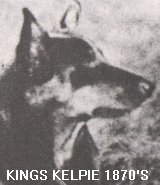
De kelpie stamt af van de verschillende soorten herdershonden die in de eerste helft van de negentiende eeuw met de engelse en de schotten naar Australië kwamen. De naam Kelpie komt van een bijzonder vooraanstaande herdershond, Kings Kelpie, die rond 1870 leefde. Het ras kreeg in 1902 zijn eerste standaard. De Kelpie is een onvervangbare hulp bij de Australische veehouderij. Dankzij zijn buitengewone herderseigenschappen - onvermoeibaar, onverschrokken en leergierig - is de hond in Australië een geïntrigeerd en onmisbaar onderdeel van de moderne schapenhouderij geworden. Hij staat bekent als een uitstekende herders- en gehoorzaamheidshond. Hij is zacht en hartelijk. Buiten Australië komt zij sporadisch voor.
Samenvatting van de rasbeschrijving.
De kelpie moet levendig, sterk, robuust, soepel en goed gespierd zijn. |
The ancestors of the Kelpie were simply (black) dogs, called Colleys or Collies. The word "collie" has the same root as "coal" and "collier (ship)". Some of these Colleys were imported to Australia for stock work in the early 1800s, and were bred to other types of dogs (including the occasional Dingo), but always with an eye to working sheep without direct supervision. Today's Collie breeds were not formed until about 10 or 15 years after the Kelpie was established as a breed,with the first official Border Collie not brought to Australia until after Federation in 1901.
The first "Kelpie" was a black and tan bitch pup with slightly floppy ears bought by Jack Gleeson about 1860 from a litter born on Warrock Station near Casterton, owned by George Robertson, a Scot. This dog was named after the mythological kelpie from Celtic folklore. Legend has it that "Kelpie" was sired by a Dingo, but there is little evidence for or against this. In later years she was referred to as "(Gleeson's) Kelpie", to differentiate her from "(King's) Kelpie", her daughter.
The second "Kelpie" was "(King's) Kelpie", another black and tan bitch out of "Kelpie" by "Caesar", a pup from two sheep-dogs imported from Scotland. Again, there are legends that these two sheep-dogs may well have never seen Scotland, and may well have had Dingo blood. "(King's) Kelpie" tied the prestigious Forbes Trial in 1879, and the strain was soon popularly referred to as "Kelpie's pups", or just Kelpies.
|
RASSTANDAARD / BREED STANDARD
Introduction
The Australian Kelpie is a medium sized Dog, standing between 17 and 20 inches at the shoulder, he is a short coated, and prick eared, he comes in seven colours, Red, Red/Tan, Black, Black/Tan, Fawn, Chocolate, and Smoke Blue. He is it fairly active, very loyal and simply great with children, he does need regular exercise, and a way in which to channel his almost inexhaustible energy, this can easily be achieved by taking him along to an Obedience School, where he will excel at not only Obedience but Agility as well. He is a dog that has very few, if any Genetic faults, and is generally a fit and healthy Dog.
FCI-standaard Nr. 293 21-4-1997 (GB)
ORIGIN: Australia
UTILIZATION: Sheepdog.
CLASSIFICATION FCI: Group 1
Sheepdogs and Cattledogs, except Swiss
Mountain and Cattledogs
Section 1
Sheepdogs With working trial.
GENERAL APPEARANCE: The general appearance shall be that of a lithe , active dog of great quality, showing hard muscular condition combined with great suppleness of limb and conveying the capability of untiring work. It must be free from any suggestion of weediness.
BEHAVIOUR/CHARACTER: The Kelpie is extremely alert, eager and highly intelligent, with a mild, tractable disposition and an almost inexhaustible energy, with marked loyalty and devotion to duty. It has a natural instinct and aptitude in working of sheep, both in open country and in the yard. Any defect of structure or temperament foreign to a working dog must be regarded as uncharacteristic.
HEAD: The head is in proportion to the size of the dog. The overall shape and contours produce a rather fox like expression, which is softened by the almond-shaped eyes.
CRANIAL REGION:
Skull: Slightly rounded and broad between the ears. The forehead running in a straight profile towards the stop.
Stop: Pronounced.
FACIAL REGION:
Nose: The colour conforms to that of the body coat.
Muzzle: Cleanly chiselled and defined, preferably slightly shorter in length than the skull. Lips: Tight and clean, free from looseness.
Teeth: The teeth should be sound, strong and evenly spaced, the lower incisors just behind but touching the upper, that is a scissor bite.
Cheeks: Neither coarse nor prominent, but round to the forface.
Eyes: The eyes are almond shaped of medium size, clearly defined at the corners, and show an intelligent and eager expression. The colour of the eyes to be brown, harmonising with the colour of the coat. In the case of blue dogs a lighter coloured eye is permissible.
Ears: The ears are pricked and running to a fine point at the tips, the leather fine but strong at the base, set wide apart on the skull and inclining outwards, slightly curved on the outer edge and of moderate size. The inside of the ears are well furnished with hair.
NECK: The neck is of moderate length, strong, slightly arched, gradualy moulding into the shoulders, free from throatiness and showing a fair amount of ruff.
BODY: The length of the dog from the forechest in a straight line to the buttocks, is greater than the height at the withers, as 10 is to 9.
Topline: Firm, level.
Loins: Strong and muscled.
Croup: Rather long and sloping.
Chest: Deep rather than wide.
Ribs: Well sprung.
Flanks: Of good depth.
TAIL: The tail during rest should hang in a very slight curve. During movement or excitement the tail may be raised, but under no circumstances should the tail be carried past a vertical line drawn through the root. It should be furnished with a good brush.
Set on a position to blend with sloping croup, and it should reach approximately to the hock.
LIMBS:
FOREQUARTERS: The forelegs should be muscular with strong but refined bone, straight and parallel when viewed from the front.
Shoulders: Clean, muscular, well sloping with the shoulderblades close set at the withers.
Upperarm: Should be at a right angle with the shoulderblade.
Elbow: Neither in nor out.
Pastern: When viewed from the side, the pasterns should show a slight slope to ensure flexibility of movement and the ability to turn quickly.
HINDQUARTERS: Should show breadth and strength. When viewed from behind, the hind legs, from the hocks to the feet are straight and placed parallel, neither close nor too wide apart.
Stifles: Well turned.
Hocks: Fairly well let down.
Feet: The feet should be round, strong, deep in pads, with close knit well arched toes and strong short nails.
GAIT/MOVEMENT: To produce the almost limiteless stamina demanded of a working sheepdog in wide open spaces, the kelpie must be perfectly sound, both in construction and movement. Any tendency to cow hocks, bow hocks, stiltiness, loose shoulders or restricted movement, weaving or plaiting is a serous fault. Movement should be free and tireless and the dog must have the ability to turn suddenly at speed. When trotting the feet tend to come closer together at the ground level as speed increases, but when the dog comes to rest he stands four square.
COAT:
HAIR: The coat is a double coat with a short, dense undercoat. The outer coat is close, each hair straight, hard and lying flat, so that it is rain-resisting. Under the body to behind the legs, the coat is longer and forms near the thigh a mild form of breeching. On the head (including the inside of the ears), to the front of the legs and feet, the hair is short. Along the neck it is longer and thicker forming a ruff. The tail should be furnished with a good brush.. A coat either too long or too short is a fault. As an average the hairs on the body should be from 2 to 3cm (appr. 3/4-1 1/4 inch) in length.
COLOUR: Black, black and tan, red, red and tan, fawn, chocolate and smoke blue.
SIZE:
Height: The height at the withers shall be for the dogs 46 to 51 cm (approx. 18-20 inches), Bitches 43 to 48 cm (approx. 17-19 inches).
FAULTS: Any departure from the foregoing points should be considered a fault and the seriousness with which the fault should be regarded should be in exact proportion to its degree.
N.B.: Male animals should have two apparently normal testicles fully descended into the scrotum.
|
|
gr.
Bianca
© 2002
B. Verweijmeren
All rights reserved. No part of these pictures may be reproduced in any form
without written permission of the artist. |